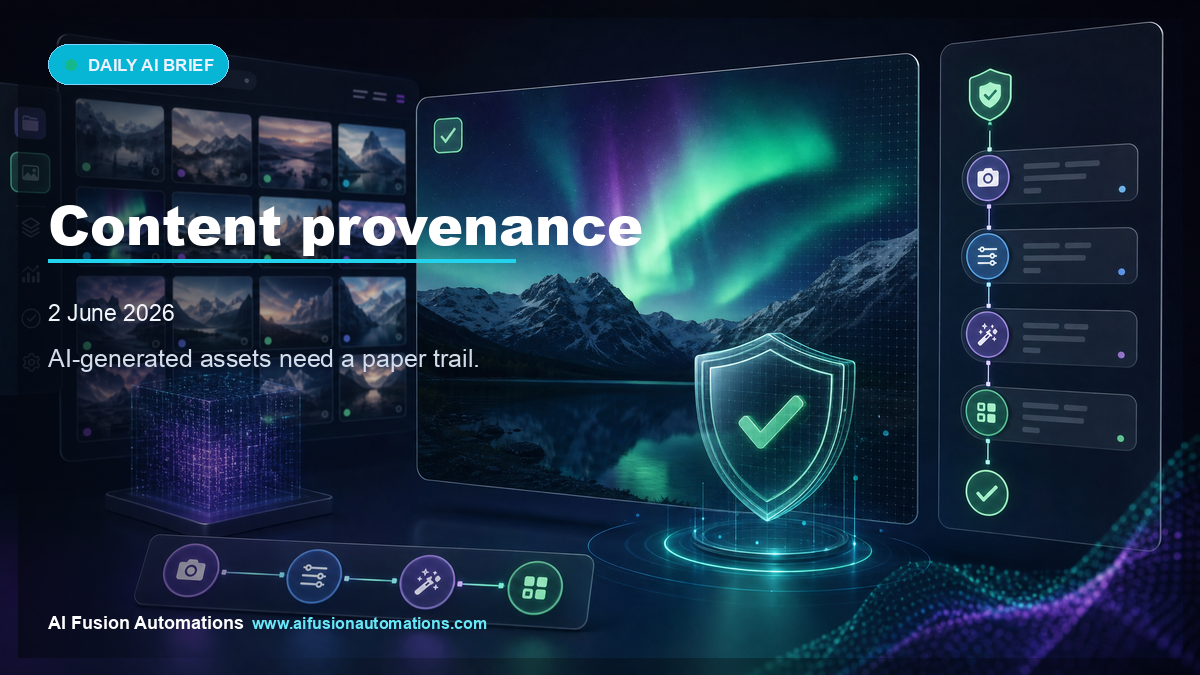
The short version: AI-generated images should not float around the business with no source, owner, or approval record. Provenance is becoming part of reputation management.
OpenAI's provenance update focuses on helping people understand whether images came from OpenAI tools. The details include content credentials, watermarking, and verification, but the business lesson is broader than one provider.
As AI images become normal in marketing, a small business needs to know which assets are real, which are generated, which are edited, and which are approved for public use.
Why provenance matters
Small businesses rely heavily on trust. A misleading image can damage that trust quickly, even if the mistake was unintentional. A generated product image, exaggerated before-and-after, or invented customer scene can create reputational risk.
Provenance helps answer basic operational questions: where did this image come from, who made it, what tool was used, and is it safe to publish?
What to record
- Tool used to create or edit the image.
- Prompt or project note for important public assets.
- Original source files if the image is edited.
- Who approved it and when.
- Where it was published.
This does not need a complex compliance system. A simple asset log is enough for most small businesses at the start.
Operator move for this week
Create a basic AI asset register. For every AI image used publicly, record the tool, source file, approver, publish location, and whether the image contains any claim or implied proof.
Bottom line
AI image generation is useful, but trust needs a paper trail. The business that can explain its assets will be in a better position than the business that cannot remember where they came from.